
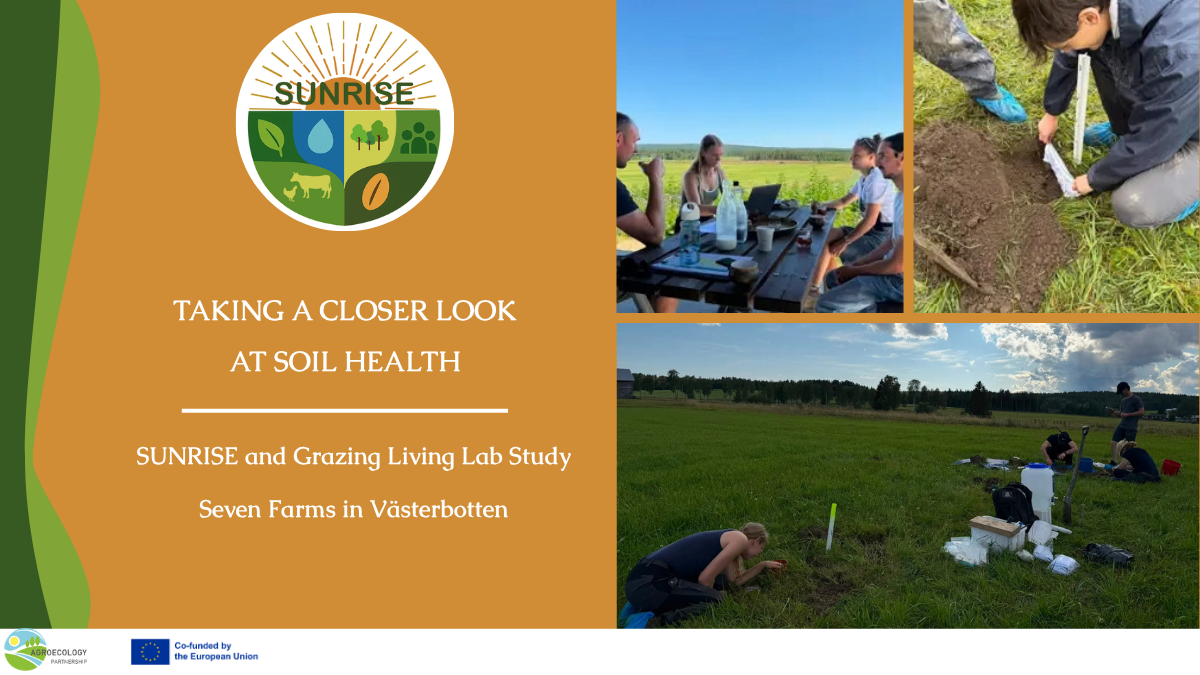
As part of the SUNRISE project, researchers from the Swedish University of Agricultural Sciences (SLU) have been investigating soil health across seven livestock farms in Västerbotten, northern Sweden. The activities were carried out in collaboration with the SustAinimal Grazing Living Lab Northern Node, bringing researchers and farmers together to better understand how different farming practices influence soil health.
During two weeks in August 2026, the research team visited dairy, beef cattle and sheep farms to conduct field assessments and collect soil samples for further laboratory analysis.
The work aims to explore how different grazing and land-management practices affect soil conditions and how soil health can be assessed using both laboratory analyses and practical field methods.
The collaboration with the participating farms began last year. In May 2026, the research team conducted SUNRISE agroecological assessments through structured interviews with farmers. These discussions provided valuable information about current farming practices, challenges and opportunities for further developing agroecological approaches.
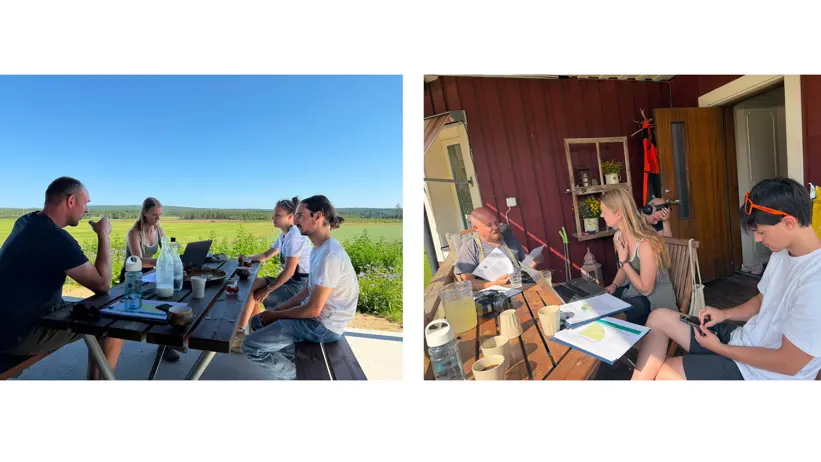
Based on the interviews, two fields were selected at each farm: one where an agroecological or new management practice was being applied and another comparable field serving as a reference.
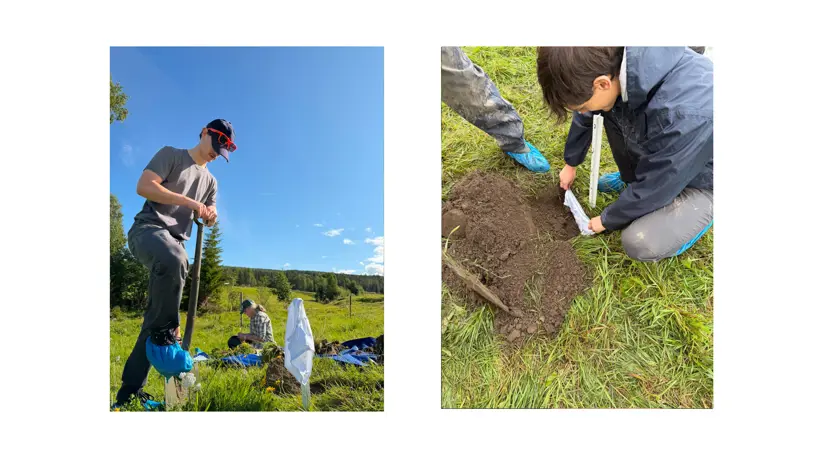
The researchers returned in August to collect soil samples and carry out several field assessments. These included examining soil structure, counting earthworms, measuring water infiltration and soil pH, and checking for soil compaction.
The team also used a simple and engaging method to assess biological activity: cotton underwear was buried in the soil for eight weeks. The level of decomposition provides an indication of biological activity and the functioning of the soil ecosystem.
Connecting farmers and researchers through SUNRISE
The activities demonstrate the central role of Agroecological Living Labs (AELLs) within SUNRISE. By working directly with farmers under real farming conditions, researchers can assess agroecological practices while incorporating farmers’ knowledge and experience into the research process.
The soil samples collected in Västerbotten will also be analysed for characteristics including soil type, pH, carbon content and key nutrients. Using standardised methods will allow the results to be compared not only between the participating Swedish farms but also with findings from other SUNRISE AELLs across Europe.
What comes next?
The work will continue in Norrbotten in 2027, further expanding the assessment of soil health in northern Sweden.
Results from the Västerbotten farms are also expected to be shared with farmers during a soil-health workshop organised by SLU in 2027. The workshop will provide an opportunity to discuss the findings, compare results and explore practical methods that farmers can use to better understand the health of their soils.
Through activities like these, SUNRISE continues to connect scientific research with practical farming experience, supporting knowledge exchange and the development of more sustainable and resilient agroecological farming systems across Europe.